Planning and dreaming

The farm was our first house, our first renovation, and to up the pressure, my ancestor’s first ever home. When it came time to start thinking in earnest about what kind of work we’d like to do on the house, our architect urged us to dream big. Imagine all of the things you’d like to do to the house in an ideal world, she said, and let’s draw up a master plan. That way you don’t spend time and money moving a window, for example, only to realize down the road that you wanted to add on anyway.
IMG_0105 3
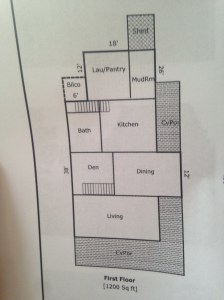
The original layout downstairs

It made sense to Oli and I, and we started to dream in the abstract. “Oooo, I’ve always wanted a stone chimney,” I said. “I’ve always wanted a master suite!” Oli said. We compiled our mile-long wish list and sent it over to the architect to review. I’ll never forgot the panic that washed over me when we first sat down with her and she rolled out the plans. She had done a masterful job of fitting all of our wishes into the new house, but every single wall had been moved, changed, touched. It was an entirely new house. Gone was the dark bedroom on the first floor where my grandfather was born. The kitchen where my Mom sat as a little girl was no longer recognizable, now that it was a hallway. There was a new addition on the back to house the giant kitchen.
IMG_0100 2
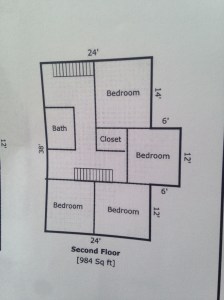
The original layout upstairs


I felt tears and anger well up in the back of my throat. It only fully hit me, in that moment, that I wanted to change as little as possible about this house. I wanted to update it, yes. I wanted it to feel fresh and beautiful and revived. But I didn’t want my “dream farmhouse.” I wanted this farmhouse.

We went back and forth with the architect for months before Oli and I realized that what we really wanted was more of an update and less of a renovation. Little did we know, even “updating” results in tearing a house down to its studs and building it back up. But that would be a lesson we’d learn much, much later.
In with the old, out with the new

When we first looked at Far Away Farm with our friends Katie and Will, we knew we’d have to do some work on the house. Not because it was falling down–in fact, the previous owner had almost obsessively invested in the farmhouse’s infrastructure. He also invested in an impressive amount of blue and pink floral wallpaper, and as we walked through each pastel room, we cheerfully tallied up all the things we’d like to change.

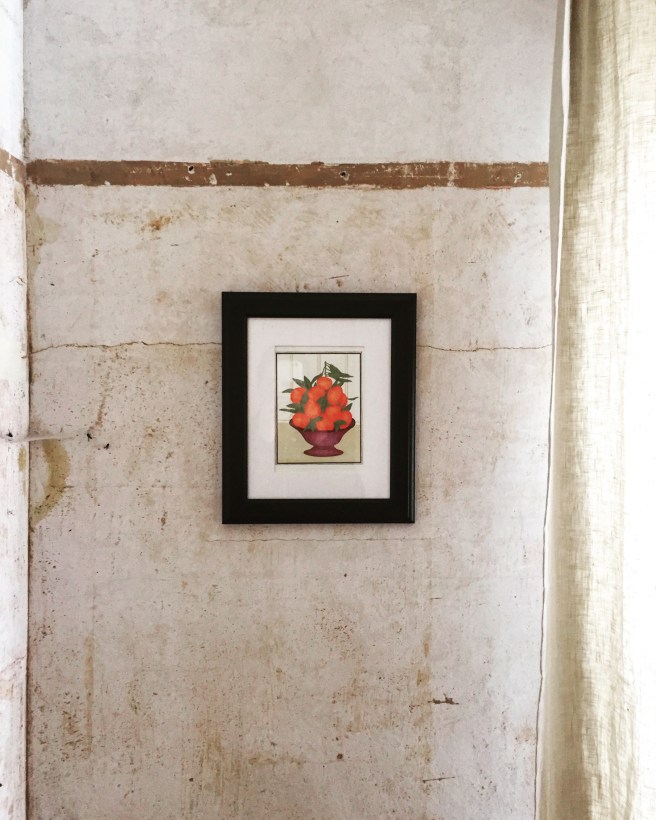
The week we closed on the house we blew through the house in a frenzy, tearing layers of wallpaper away, painting trim (formerly beige) bright white, furiously scrubbing woodwork with soap. Afterwards, we sat downstairs, the plaster walls mottled and pocked from 120 years of renovations, the heavy decorative woodwork a deeply unfashionable red mahogany, and I felt no sense of accomplishment. Only melancholy.

Plaster walls

Because where do you go from here? We exposed the house’s original bones and I fell in love. It looked old now. It looked like a place where my great grandparents could have listened to the radio, where my great grandmother could’ve baked on wood fired stove. I couldn’t paint over the horsehair plaster walls, over 120 years old and stained with paint and age. The image of a light, bright catalog ready farmhouse no longer felt right. We were crippled with fear of doing the wrong thing.

Now a year and a half later, surrounded by those same crumbling walls, we think we finally understand what we need to do. We’re slowly making the age of the house visible again by preserving or reviving textures, wood grains, natural wear and tear. And hopefully, by the end, it’ll be what I think it was meant to be–not a pastoral decorative museum, but a real, working farmhouse. The kind of place that, each time you cross the threshold you feel the deep, satisfying thrum of a hard day’s work. Home.